
Apgujeong Juvelook Volume: 3 Key Conditions for Creating Natural Volume Without Nodules
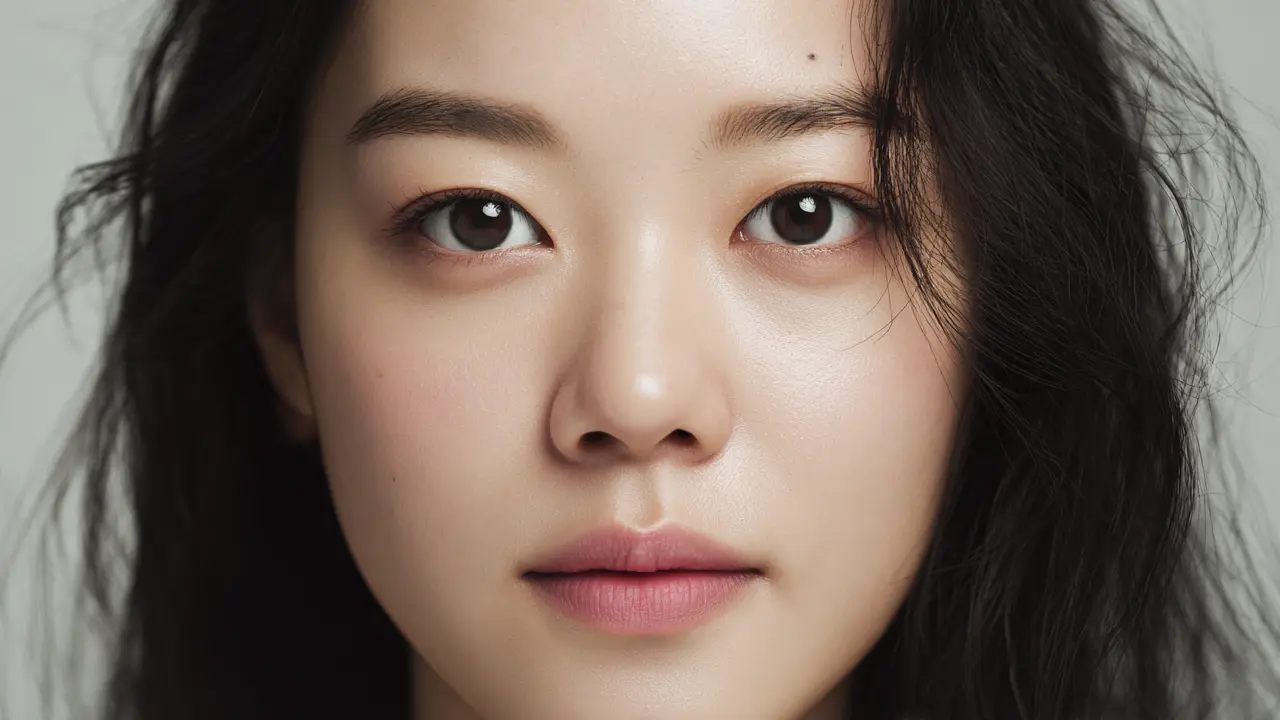
“Dr. Director, my cheeks look deeper in my nasolabial folds when they're out.
I'm afraid of looking like a filler, and I'm looking for a natural-looking jubilee volume...
”I'm still hesitant to do it because I heard a review about nodules developing."
✅ Conclusion first
Even if you apply the same amount of pressure points 3 times, there will be a difference between those that are naturally full and those that are palpable.
The difference isn't the product, it's the hydration, injection, and concentration - and this article pinpoints the criteria.
Hello. This is Kim Young-gyun, CEO and Director of Core Dermatology.
The internet is full of Apgujeong Jubelook Volume reviews, but there are very few that actually explain why nodules form in the first place.
If you've been putting off the procedure because you're scared of nodules, we'll give you a ‘checklist of one thing you only need to do in the consultation room" at the end of this article.
Today, I'm going to summarize the 3 key conditions for achieving a tacky jubilee look, natural volume without nodules.
What's the difference between Juvelook Volume in Apgujeong and fillers?
To summarize, fillers are a ‘filling’ procedure, while tumbler jowl volume is a ‘creating’ procedure.
You need to understand this difference for the rest of the story to be easy.
You know, what we call HA fillers.
It works by placing a gel-like substance called hyaluronic acid directly into the affected area to physically fill the space.
The volume goes up as soon as you put it in, so it's an instantaneous change.
Thumbtack Jubelook volumes work on a different principle.
The main ingredient in the volume of a pressed jubelook is a biodegradable polymer called poly-D,L-lactic acid (PDLLA).
In layman's terms, it's a substance that dissolves in the skin and signals the body to rebuild its own collagen.
It also contains a small amount of hyaluronic acid (HA), so immediately after injection, the HA will lock in moisture and provide some immediate volume.
That's the key point.
After 2-4 weeks, the HA will gradually decompose, and during this time, PDLLA will continue to stimulate the production of collagen and elastin in the skin.
PDLLA itself breaks down completely into water and carbon dioxide over about six months, leaving no trace in the body. See also: Lumino Medical HK
But even after PDLLA is broken down, the newly made collagen remains in the skin.
So the effect can last for one to two years.
Let me give you an analogy.
If filler is like ‘directly stuffing cotton into an empty cushion,",
Apgujeong Juvelook Volume is similar to ‘stimulating a cushion to produce its own cotton.'.
We should also mention safety.
PDLLA is a material that has long been used in absorbable surgical sutures (dissolving sutures) and is an ingredient whose safety for the human body has been confirmed by the Korean Ministry of Food and Drug Safety (MFDS). Reference: MFDS Medical Device Information Portal
For reference, the official product name for Jubelook Volumes is ‘Lenisna’.
Each vial contains PDLLA 170mg + HA 30mg, totaling 200mg, with a particle size of 40-60μm.
Because its particles are larger than regular Juvelook (20-30μm particle size), it has a higher volume-forming ability, but this also makes the practitioner's technique more crucial. Reference: Seo SB et al. 2024, PMC
[Director Kim Young-kyun's Comment]
“There are quite a few people who come to us thinking that Apgujeong Jubelook Volume is like that, but Apgujeong Jubelook Volume is a procedure where you don't feel ‘wow, fuller!’ immediately after the treatment, but you feel it three to four weeks later when you look in the mirror and think, ‘huh? Is it different?’ If you don't know this time difference, it's easy to misunderstand that it doesn't work.‘
📝 One-line summary: JUVELUX Volume is a collagen booster that uses PDLLA to induce collagen regeneration, which is how your skin creates volume on its own, unlike fillers.
Thumbtack Jubilee Volume Nodules, why do I get them?
To be honest, nodules are not a product issue, but a ‘preparation and technique' issue.
Let me first easily summarize what a nodule is.
A nodule is when the injected substance sticks together in one place, creating a small hard lump under the skin.
In terms of size, they range from pea to lentil size, approximately 5 to 10 mm.
Most are too small to be seen and painless, so they disappear naturally.
The problem is when it gets visibly big. See also: VOS Dermatology EN
So why does it happen?
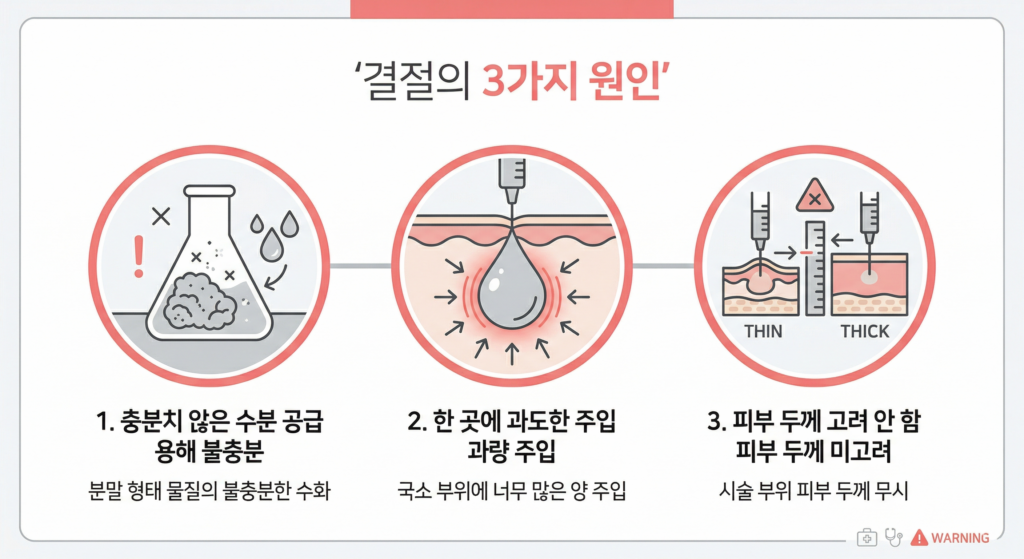
The causes can be broadly divided into three categories.
First, it's less hydrated.
This is the most common cause.
Apgujeong Juvelook Volume is a white powder (freeze-dried powder) form, not a liquid, when it arrives at the hospital.
Before the procedure, you'll need to mix saline solution to dissolve it enough, a process called ‘hydration'.
Have you ever tried powder drinks?
If you add too little water, the powder clumps up and leaves lumps.
The same goes for the thumbtack jubelook volume.
If the concentration is too thick, the particles are more likely to clump together, and if they enter the skin in that clumped state, they become the seeds of a nodule.
Conversely, what happens if you dilute it too much? The effect is reduced. See also: Primi Clinic EN
Second, you're putting too much in one place.
“Since the ball is off, shouldn't we just put a lot in there?”
There are many people who think this way.
However, Apgujeong Juvelook Volume is not a filler.
PDLLA is a substance that ‘stimulates‘ collagen regeneration, not a substance that ’fills" space.
If you put too much in one place, it can cause an excessive inflammatory response in that area, and that can lead to a nodule.
The idea is to inject small, evenly distributed amounts over a large area. See also: VOS Dermatology EN
Third, a concentration-depth setting that ignores skin thickness.
Not all facial skin is the same thickness.
It's relatively thick on the cheeks, and quite thin under the eyes and on the forehead.
Let me give you an analogy.
If you put candies of the same size into a thin plastic bag, you can see their shape clearly, but if you put them into a thick bag, you can't see anything, right?
The same goes for skins.
If you inject a thin area at the same concentration and depth as a thicker area, even the smallest bumps can be felt or seen on the surface. See also: Primi Clinic EN
In a clinical case published in 2024, a 42-year-old woman was reported to have developed a non-inflammatory nodule 3 weeks after receiving a large-particle Juvederm volume (40-60 μm) injected under her eye (tear trough).
The authors of the paper analyzed that conventional Juvéderm with smaller particle sizes (20-30 μm) would be more suitable for that site. Reference: Seo SB et al. 2024, PMC
One more thing to mention is that individuals with autoimmune diseases (such as lupus, rheumatoid arthritis, etc.) or frequent allergic reactions may have an increased risk of developing nodules due to an overactive immune response.
Before the procedure, you must inform the medical staff of your medical history.
[Director Kim Young-kyun's Comment]
“I fully understand how people feel scared after reading about nodules. However, based on the cases of nodules I've seen over the past 15 years, most were not due to ‘product issues‘ but rather ”process problems." This could include rushing the procedure, being too greedy with a single spot, or not adequately considering skin thickness. If you meticulously adhere to these three points, the risk of nodules can be significantly reduced.”
📝 One-line summary: The three main causes of Apgujeong Juvelook Volume nodules are dehydration, excessive injection, and ignoring skin thickness, and these are issues that can be prevented with the practitioner's preparation and technique.
What are the 3 conditions for natural volume without nodules?
In a nutshell: 1) complete hydration, 2) distributed infusion, and 3) site-specific dosing.
Now that we've covered the causes above, we can go in reverse.
Let's break it down one by one.
Condition 1 - Minimum 24 hours, complete hydration
The manufacturer's basic guidelines for Jubelook Volume say, “Add saline solution and hydrate at room temperature for at least 24 hours, making sure the powder is completely dissolved.”.
But there's no specific amount of saline or even the optimal temperature.
So, in effect, each hospital has to create its own sign language protocol. See also: VOS Dermatology EN
This is where the differences diverge.
Hospitals that do a lot of press-on Jubelook volume procedures run hydration every day, so they always have enough product on hand.
On the other hand, hospitals that only operate occasionally start using sign language when an appointment is made, but if urgent schedules overlap, they inevitably have to shorten the sign language time.
What happens if you perform a procedure with insufficient hydration?
The particles enter the skin without being evenly dispersed.
A nodule starts like this.
And one more thing.
Stirring by hand to dissolve and mixing with a machine (mixer) to make it homogeneous are different results.
No matter how much I stir the powdered drink with a spoon, powder is left at the bottom.
Apgujeong Juvelook Volume also needs to go through a mechanical mixing process to create a uniform suspension. See also: AB Skin Clinic EN
Condition 2: Inject broadly, in small amounts, and spread out.
“We've had people ask us to ”put a lot in the off bowl".
The mind understands.
However, since Juvelook Volume in Apgujeong is a procedure that ‘induces' collagen regeneration, concentrating it in one area does not improve its effectiveness; rather, it becomes dangerous.
The more you inject into one point, the higher the risk of nodules.
At Core Dermatology, we use small injections divided into multiple points over a large area to treat cheeks and nasolabial folds.
This allows PDLLA to spread evenly under the skin, stimulating collagen uniformly and creating natural volume without bumps.
Cannulas (tubes with rounded ends) make it easier to disperse over a wide area while reducing the risk of nerve or blood vessel damage.
Condition 3: Concentration adjustment according to regional skin thickness
The manufacturer provides a standard concentration.
But that concentration doesn't work for every part of the face.
Standard concentrations are fine for areas of skin that are thicker, like the cheeks, but,
In places with thin skin, such as under the eyes or on the forehead, the concentration may be too much.
For thinner areas, you'll need to use a lower concentration and adjust the depth of injection. See also: Primi Clinic EN
It's not like the manual says “1 TP3T for the forehead and 1 TP3T for the cheeks”.
This is an area where the practitioner directly judges the patient's skin thickness, the degree of volume loss, and the amount of subcutaneous fat.
To be honest, this is the hard part if you don't have a lot of experience.
[Director Kim Young-kyun's Comment]
“There are three things I always check when I'm doing a press-on juvederm volume procedure. I never skip this routine, because missing one of them can change the outcome. Nodules don't happen because you're ‘unlucky,’ they happen because you skipped somewhere in the process.‘
📝 One-line summary: Having the procedure done at a hospital that does all three - complete hydration + dispersed infusion + site-specific concentration control - can significantly lower the risk of nodules.
How many treatments of Apgujeong Juvelook Volume are needed to see effects?
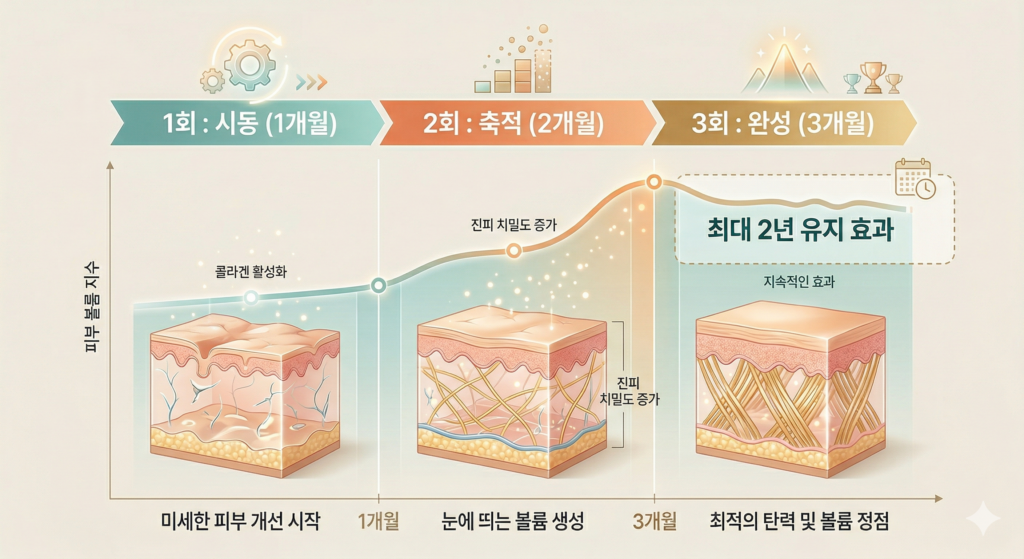
To summarize, three repeat treatments spaced three to four weeks apart is the standard recommended cycle.
“We get asked so many times, ”Can I just get hit once?".
The bottom line is that you should notice initial volume improvement and firmness changes after just one session.
If you have mild cheek puffiness or your skin hasn't lost much elasticity yet, a single treatment may be enough to make you go, “Huh? Something's different.”.
But if you want stable, long-lasting results, that's a different story.
Repeating three times, three to four weeks apart, will give your skin enough time to regenerate, and the production of collagen and elastic fibers (elastin) will become more firmly established.
After three sessions, the results can last about six months to a year, and up to two years with good care. See also: AB Skin Clinic EN
And there's one thing you should know.
Thumbtack Juvederm volume is not a “wow, I'm fuller!” procedure right after you get it.
While the HA ingredient will give you some initial volume, it's not until 4-8 weeks after treatment that you'll really see the full effects.
This is because PDLLA needs time to stimulate collagen regeneration. Reference: Mode Medical Clinic SG
“Will it last a lifetime if I get it three times?”
No, let's be honest.
Collagen is a substance that your body is constantly breaking down.
Even newly made collagen naturally diminishes over time.
So, with maintenance treatments every 6-12 months, collagen regeneration is continually stimulated to maintain a certain level of firmness and volume.
[Director Kim Young-kyun's Comment]
“I always tell my patients, ‘Juvederm volume is a savings account.’ You don't put money in all at once, you put it in three times, so that the interest (collagen) sticks. If you do it once and decide, ‘It's not working,” it's too soon."
📝 One-line summary: Apgujeong Juvelook Volume is basically a treatment of 3 sessions at 3-4 week intervals, and the effects begin to appear 4-8 weeks after the treatment.
When choosing a clinic for Juvelook Volume in Apgujeong, what should you check?
In a nutshell, you could ask, “How do you hydrate an Apgujeong Jubelook volume?”.
There are a lot of dermatologists in Apgujeong who perform Jubelook volume.
They're priced differently, they're explained differently, and it can be confusing to know where to go.
So I've put together a checklist for you.
Check 1 - Is the procedure performed by a dermatologist?
Apgujeong Juvelook Volume is a procedure that requires adjusting the injection depth and concentration differently for each area.
Confirm that a dermatologist who accurately understands anatomical structures is performing the procedure.
“Just because a clinic has a sign that says ”Dermatology" doesn't mean it's a dermatology specialist hospital.
It is most reliable to check for the Korean Dermatological Association certification mark or a specialist's license. Reference: Korean Dermatological Association
Check 2 - Do you have enough experience with Juvederm Volume procedures?
As mentioned earlier, sign language protocols vary from hospital to hospital.
Hospitals that do a lot of procedures run hydration every day, so product readiness is stable.
On the other hand, an infrequent provider will only start signing on the day of the appointment, and will cut back on signing time if they fall behind schedule.
From a patient's perspective, it's not practical to go through the hospital's exact hydration protocols one by one.
So the simplest way to do it is this.
When consulting, ask, “How do you hydrate Juvelook Volume?”.
If a hospital can answer this question specifically, it means they are at least paying attention to the preparation process.
Check 3 — Do you offer 1:1 custom design?
“Juvelook Volume 3 sessions package, how much?”
You should reconsider places that only offer a set menu like this.
Everyone’s cheek dimple depth, nasolabial fold depth, and skin thickness differ.
Even if you give the same three injections, the results will vary completely depending on where, how much, and in what concentration it's administered.
At Core Dermatology, we first draw a volume loss map of the entire face before the procedure, and then separately design the injection amount and concentration for each area.
If this step is skipped, it's difficult to achieve natural results, no matter how good the product you use.
[Director Kim Young-kyun's Comment]
“To be honest, I'm actually happy when a patient asks me in the consultation room, ‘How do you do sign language?’ It means they've done their homework, and they're often happy with the results, which is a question I should be able to answer as an acne dermatologist.”
📝 One-line summary: When choosing a Juvelook Volume clinic in Apgujeong, check if a dermatologist performs the procedure directly, if they have sufficient experience, and if they offer 1:1 customized planning.
Apgujeong Juvelook Volume FAQ
If you're considering JUVÉLOOK volume in Apgujeong, we recommend checking out the clinic's process before the procedure itself. Price and reviews are helpful, but it's the preparation and the practitioner's judgment that will give you a natural, nodule-free result.
Don't just go by reviews, don't just go by the lowest price, and make sure to check the three things I mentioned today in the consultation room - that alone can make a difference in your outcome.
Thank you for reading the long text.
Sincerely, Kim Young-gyun, Chief Director of Core Dermatology
⚕️ Legal Notice This content is based on the Medical Service Act and does not guarantee the effectiveness of any specific procedure. Procedure results may vary depending on an individual's skin condition, physical constitution, and lifestyle habits. Please make sure to consult thoroughly with your attending specialist before making a decision. Patient cases used in this article have been anonymized and altered for privacy protection.
📚 References
- Juveruck Official Site (Hana Pharm)
- Jubelook Korea Official
- Mode Medical Clinic Singapore - Juvelook PDLLA Skin Booster
- VOS Dermatology - Juvelook Nodules: What You Need to Know
- Lumino Medical HK - Juvelook & Juvelook Volume
- Primi Clinic - Juvelook Side Effects and Nodule Prevention
- AB Skin Clinic - Juvelook Volume Effects, Cycle and Nodule
- Seo SB, Wan J, Yi KH (2024) - Energy-Based Device Management of Nodular Reaction Following PDLLA Injection, PMC
- No YA et al. (2015) - 24-Month Safety Evaluation of PDLLA Filler, PubMed
- MFDS Medical Device Information Portal
- The Korean Dermatological Association



 한국어
한국어  English
  日本語
日本語  简体中文
简体中文